| Primary role |
Complete media operations and delivery platform |
Established transcoding-centered platform |
| Media workflow |
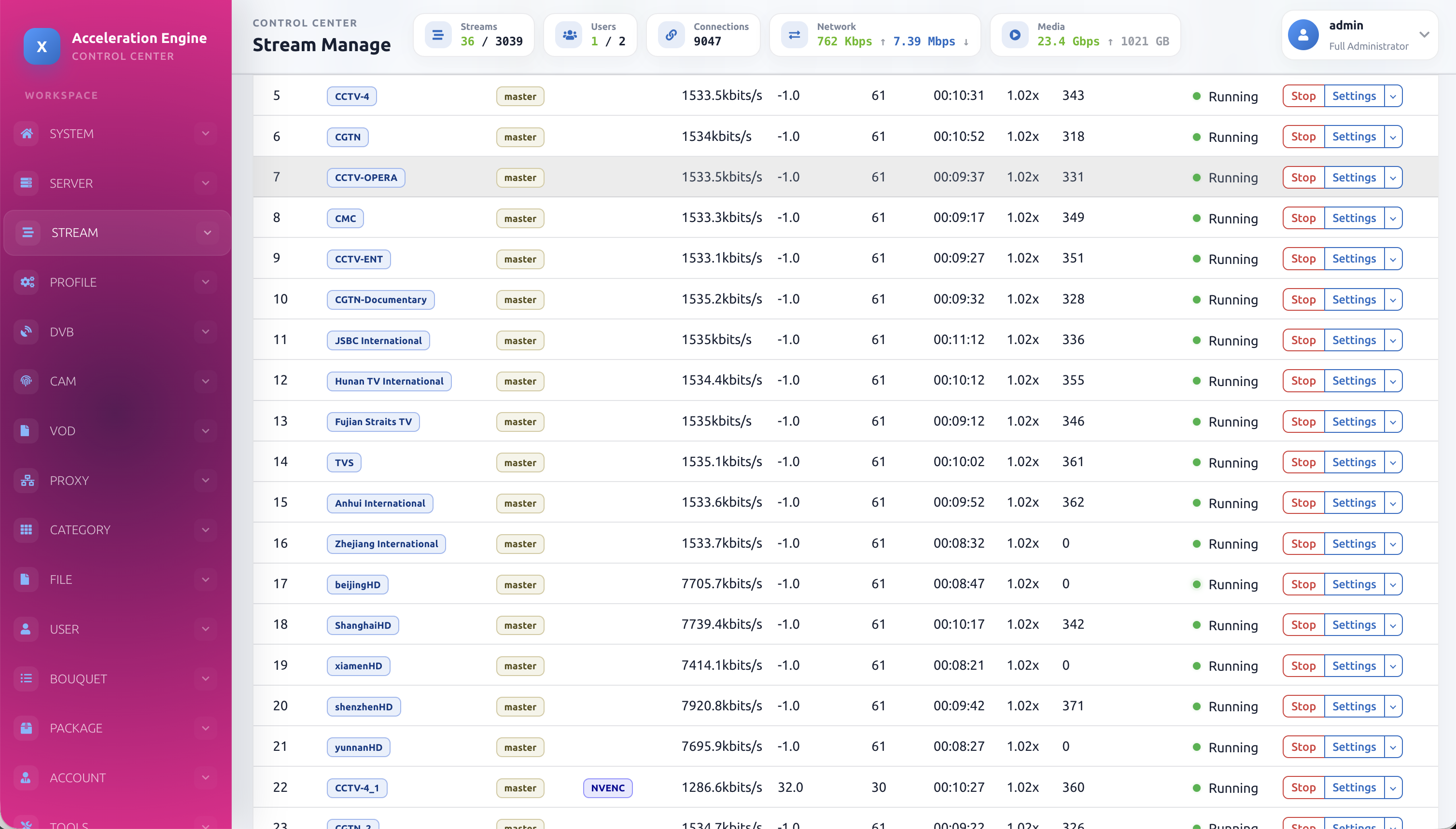
Live, VOD, SAT>IP network tuners, local DVB, SoftCAM, transcoding, remuxing, and outputs |
Live transcoding, remuxing, and output workflows |
| Acceleration |
CPU, Intel QSV, NVIDIA NVENC, and multi-GPU |
QuickSync and NVENC product editions |
| HLS performance |
Full HLS share retained with zero request errors or freezes; response-header P99 was about 9× lower |
Full HLS share retained with zero request errors or freezes; startup P99 was about 1.18× lower |
| Delivery CPU efficiency |
About 1.8× the efficiency when normalized by received-player workload and CPU-seconds per GiB |
About 1.8× Engine's CPU cost for the normalized delivery workload |
| Memory footprint |
About 22× lower baseline RSS; Codec's sampled load peak was about 1.35× Engine's |
Higher baseline and sampled-peak RSS across the scoped product processes |
| HTTP-TS delivery |
Delivered the full fixed share; response-header P99 was about 17.7× lower in the observed run |
Delivered the full fixed share at about 1.05× Engine's aggregate HTTP-TS media rate |
| Delivery & scale |
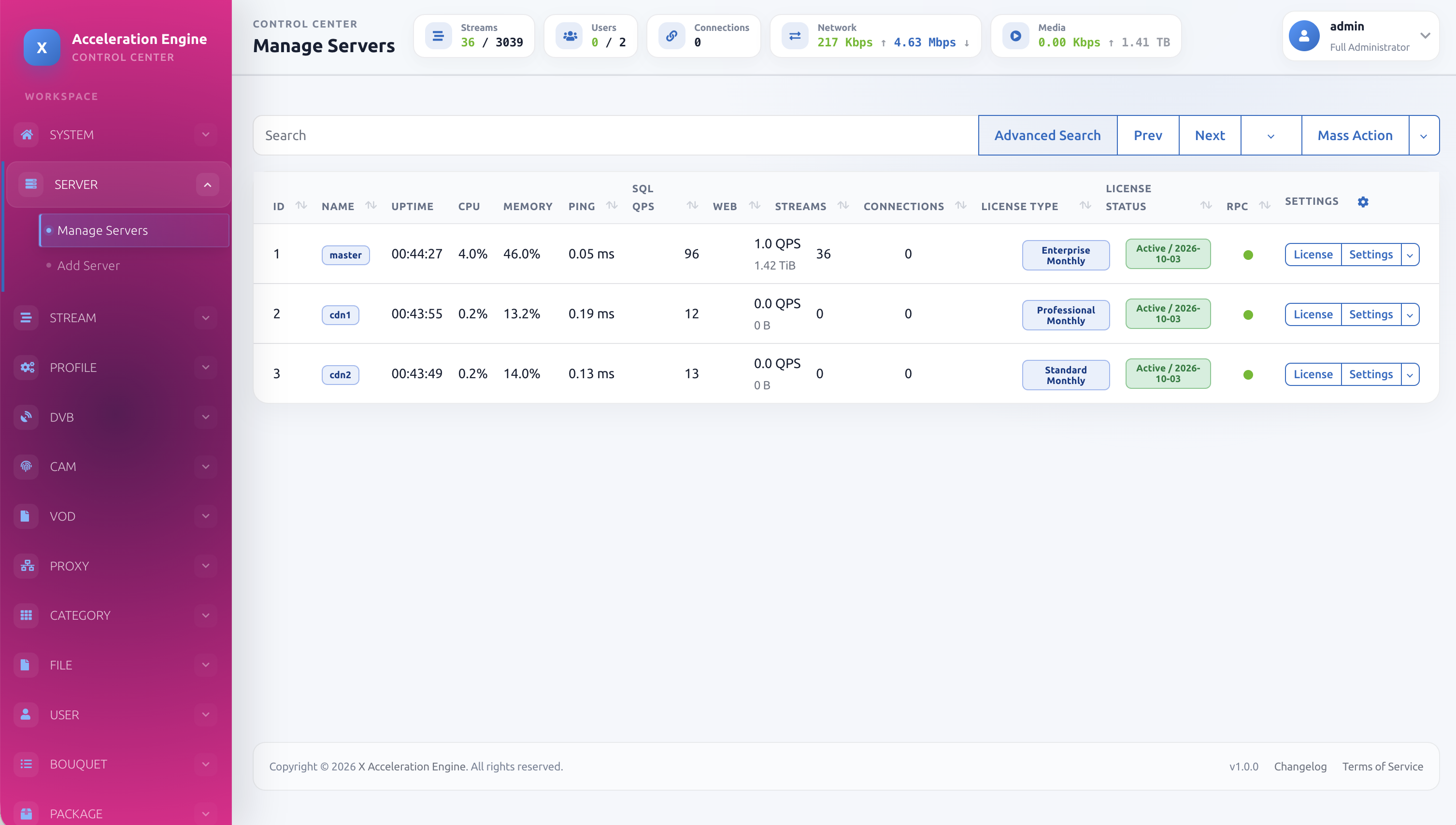
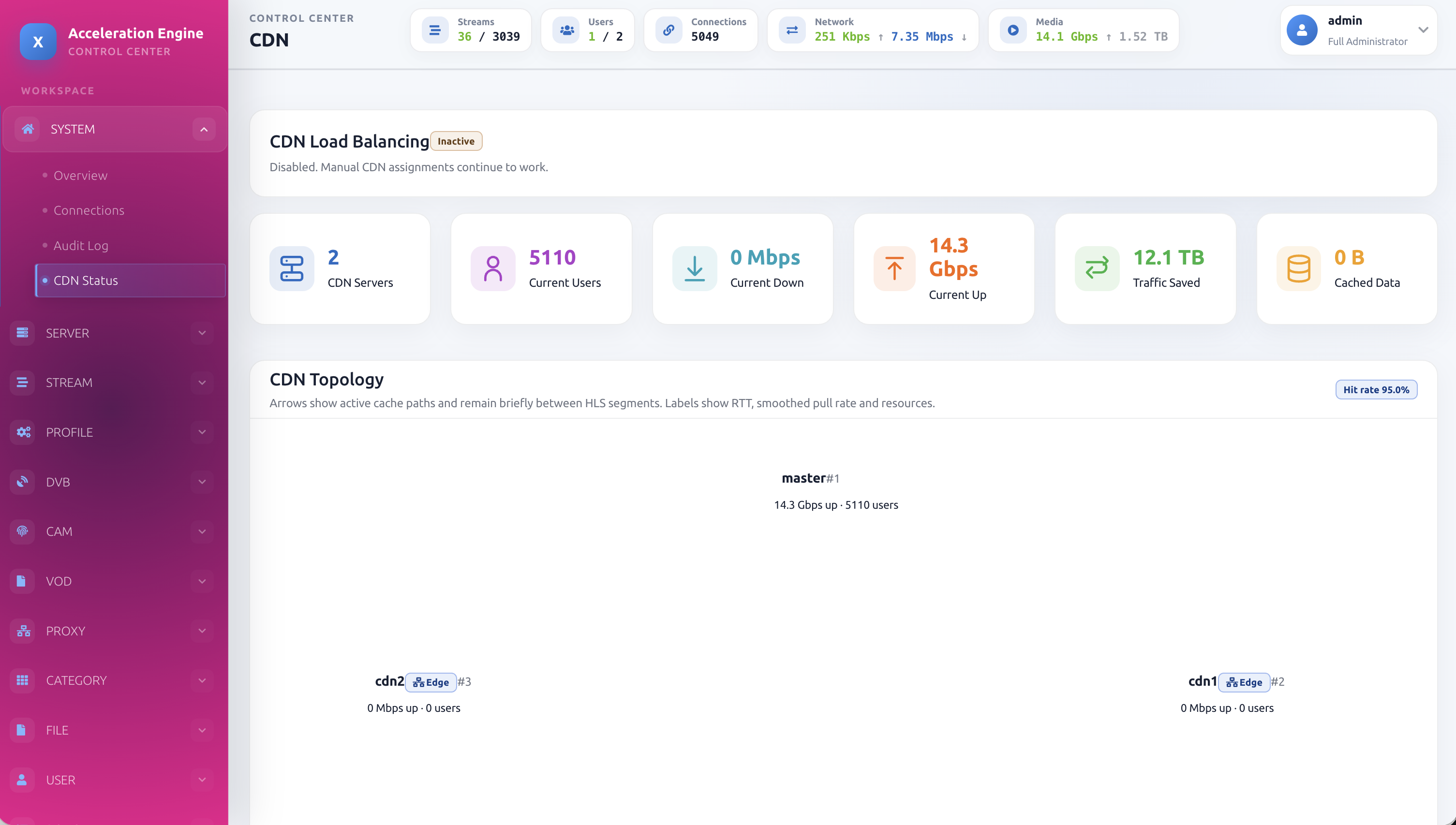
Built-in CDN, load balancing, and HLS/DASH caching. Per-server tiers provide 200–2,500 active streams, 1,000–25,000 connections, and 1–25 Gbps delivery bandwidth |
Scale is primarily determined by CPU/GPU transcoding capacity and the external delivery or CDN layer |
| Subscriber operations |
Users, resellers, and subscriber packages with configurable prices, maximum playback resolution, connections, and CDN routing |
Established user, package, and reseller workflows |
| Operational insight |
Modern telemetry, audit log, maintenance, API, and capacity assessment |
Familiar Codec monitoring and management tools |
| Best fit |
New deployments and teams consolidating their streaming stack |
Existing Codec environments and focused processing requirements |